Lompat ke isi utama

About UCSI Hospital

About UCSI Hospital

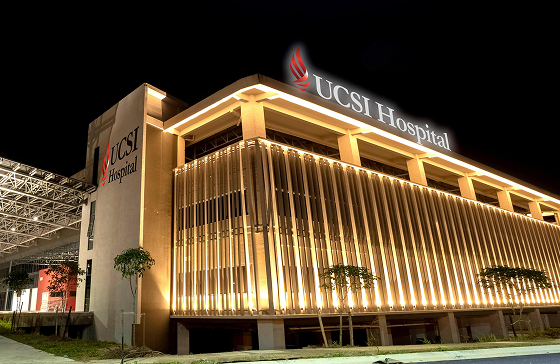
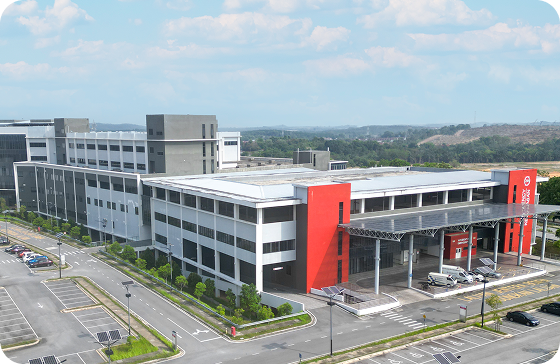
  • UCSI Hospital was launched in March 2021 as a 130-bed facility that will eventually maximise its capacity at 1,000 beds.
  • UCSI Hospital is the only private hospital in Malaysia with a public wing, enhancing access to quality health care.
  • UCSI Hospital is a tertiary medical care hospital that will advance health care and medical science with some of the world’s best universities.

Vision

To be a leading tertiary care hospital in Malaysia for all our stakeholders, standing out as a great place to receive care and a great place to work in health care.

Mission

  • Heal the sick and provide excellent health care solutions
  • Provide high quality patient care through integrated clinical practice
  • Improve the health of local and international communities
  • Advance medical science through research and education

Our Strategy

  • Advance health care through treatment, research and public awareness.
  • Be a health care partner to patients, providing treatments across each stage of life.
  • Enhance the patient and caregiver experience through a medical care that inculcates AI and digital platforms.
  • Invest in our medical care givers to stand out as an ideal place to work in health care.

Departments

UCSI Hospital offers health care solutions from the following departments. More department and services will be added to provide revolutionary and excellent health care

Anesthesiology and Pain Management

Cardiothoracic Surgery

Emergency Medicine

Internal Medicine

Neurology

Ophtalmology

Paediatrics

Psychiatry

Rheumatology

Vascular Surgery

Breast and Endocrine Surgery

Dermatology

Hand and Microsurgery

Medical Oncology

Neurosurgery

Orthopaedic Surgery

Paediatric Surgery

Radiology

Surgery

Cardiology

Ear, Nose and Throat

Infectious Diseases

Nephrology

Obstetrics and Gynaecology

Paediatric Infectious Diseases

Plastic surgery

Rehabilitation Medicine

Urology

Information Technology in Health Care

Hospitals of the future must stand out for their information technological capabilities. In this regard, UCSI Hospital will invest in advanced health IT systems to empower its stakeholders. This goes far beyond virtual appointments or electronic medical records. Rather, it’s how we interpret and correlate the data we possess to arrive at smarter health care solutions.

Patient data and details of their complications are collected.

The data is tracked and monitored constantly in line with their treatments.

Doctors evaluate the data to determine which treatments work better and what procedures are unnecessary.

Doctors and patients manage chronic diseases like high blood pressure and diabetes better.

A robust online system allows patients to coordinate with doctors and nurses.

No duplication of tests is needed as all data is available online.

The system we are investing in will have a far-reaching impact on the ways we handle - and think of - health care. From cost control to greater efficiency to preventive care, the benefits are evident. This is how we will make a difference. This is smarter health care.

  • Lower costs

We believe that effective health care results in lower, not higher, expenses with the minimisation of errors that could cost money and lives.

  • Greater efficiency

With a robust IT system that compiles electronic medical records, patients and doctors don’t have to fill up the same form or duplicate tests constantly. Caregivers can then focus on treating patients.

  • Automated systems

With automated dispensing cabinets and machines, we eliminate the risk of human error. Drugs can be stored and dispensed near the point of care, and we can control and track the distribution.

  • Early treatment and preventive care

Constant feedback will enable doctors and patients to detect complications much earlier than they would normally do. Mammograms and physicals can be scheduled quickly to avoid more expensive and invasive treatments later.

The UCSI Health Metropolis

UCSI Hospital is the crown jewel of the UCSI Health Metropolis - a mega project that is designed to turn the township of Springhill into a vibrant hub of health care, education and innovation.

Once completed, the Metropolis will include a luxury hotel, a convention centre, a lifestyle shopping mall, a skin science and aesthetics experience centre, sports facilities, retirement homes, praxis® labs and a new UCSI University campus. These upcoming additions will complement UCSI International School and Sri UCSI private school that are already operational in the area.

More infrastructure projects will be added to the 160-acre site and with this in mind, the transformation of Springhill is well and truly underway. This massive undertaking reflects UCSI Group’s commitment to transform lives and empower communities through its day-to-day operations. We have transformed the suburb of Cheras. We will now do the same for Springhill.

Research Beyond Borders

Medical research will be another hallmark of UCSI Hospital. Hospital specialists and faculty members from UCSI University’s Faculty of Medical will work together on pertinent projects that involve real-time big data analysis, medical expertise and scientific innovation.Joint research will also be conducted with some of the world’s most renowned universities.

We are confident that the ecosystem of health care, education and innovation at the UCSI Health Metropolis will facilitate scientific breakthroughs that bring manifold benefits to the global community.

Some notable endeavours are:

Precision medicine

UCSI Hospital is in talks to establish an Innovative Centre for Precision Medicine with one of the US’ best universities. By accounting for individual variability in genes, precision medicine has the potential to transform how cancer and genetic diseases are detected early, treated and potentially cured.

Epidemiologic Transition

Epidemiologic transition studies the distribution of disease and death, along with their determinants and consequences in population groups. UCSI Hospital plans on advancing the reservoir of knowledge in this field by conducting in-depth research on the epidemiologic transition in low and middle-income nations, identifying the patterns of health and diseases to refine predictions of population change.